
→ Leggi questo articolo in italiano
A brief guide to a feasible project
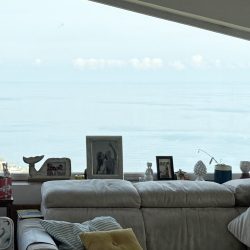
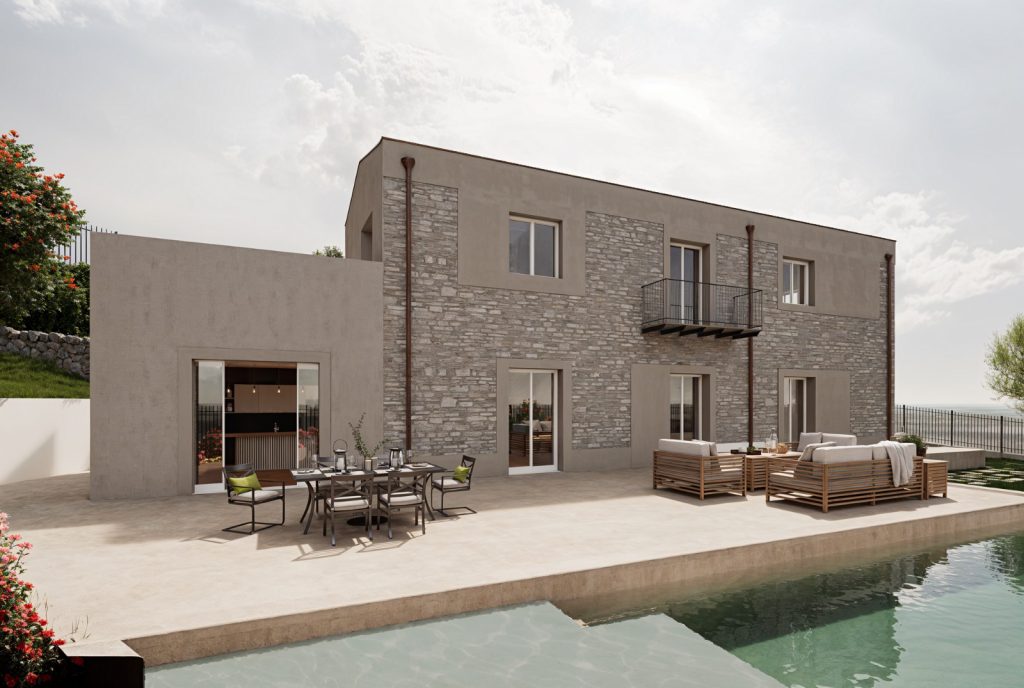
Anyone who loves life in the Sicilian hills has probably dreamed at least once of having a swimming pool at their country home. The presence of water completes the image of wellbeing we associate with seasonal residences: open air, a well-tended garden, and a pool in a place far enough—but not too far—from the city, work, and everyday stress.
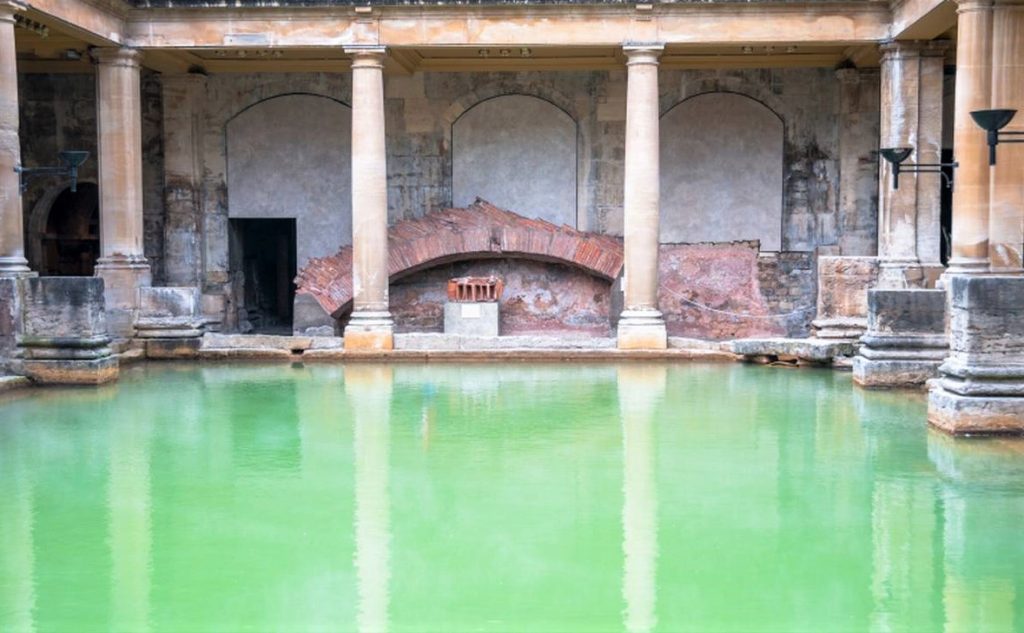
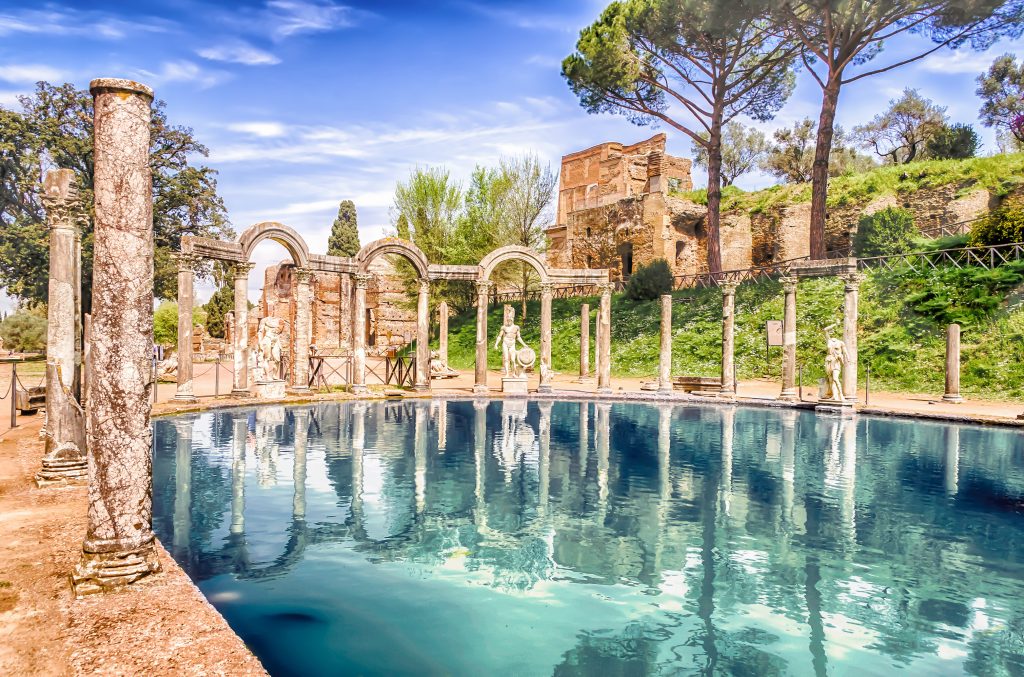
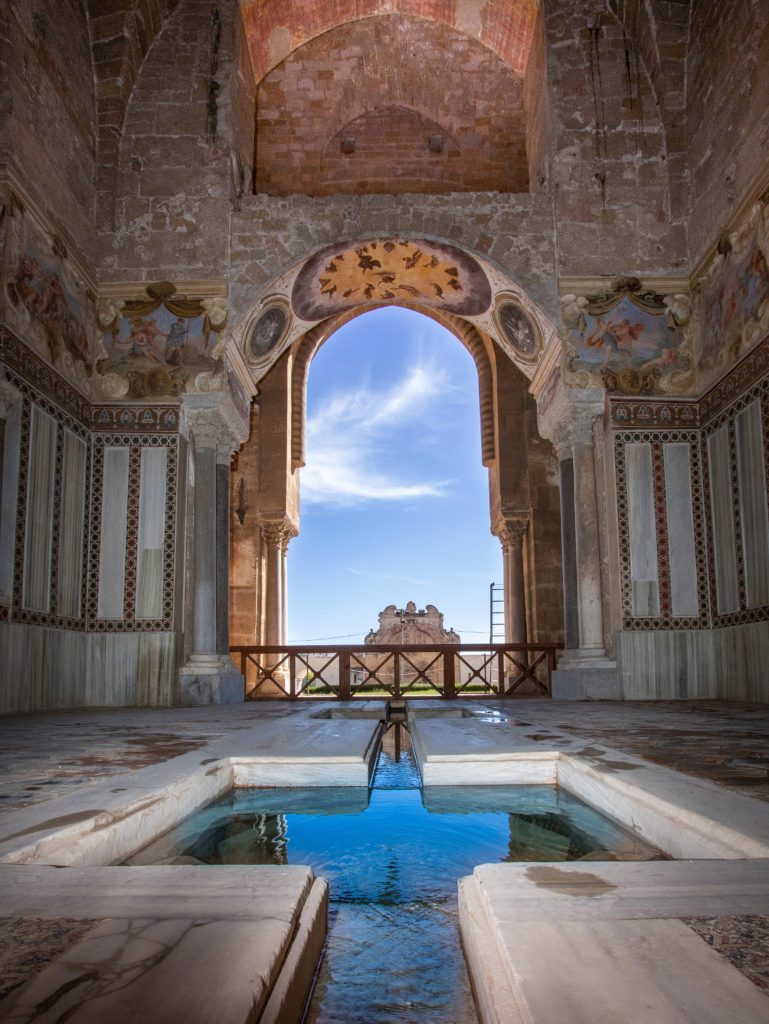
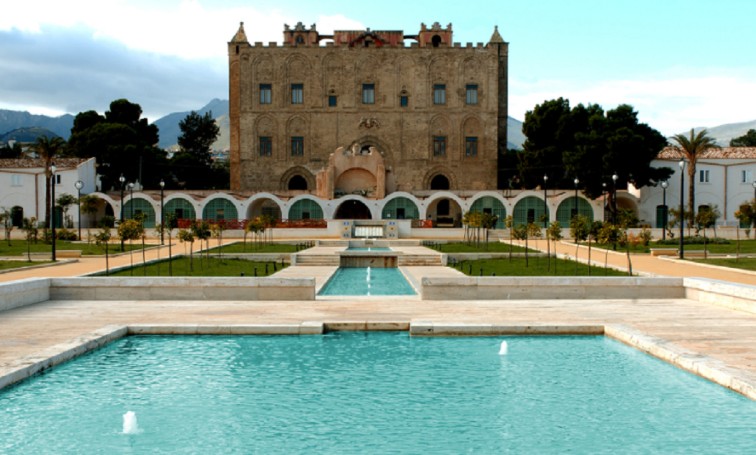
Even ancient cultures always linked water to wellbeing: from Roman villas to Arab residences, water was designed in ways that still inspire our imagination today.
A desire becomes a project
Turning this desire into reality can be a complex and costly process. There are many issues to address: urban planning regulations and landscape constraints, pool types, permits, and the professionals involved.
That’s why we’ve prepared a short, practical guide for anyone looking to understand how to build a swimming pool at a country house, especially in agricultural zones in Sicily.
Private or sports pool?
First essential distinction:
-
Sports pool → an independent infrastructure, only permitted in areas specifically designated by the urban planning tool.
-
Private pool → an accessory to a single-family residence, not open to the public, not for tourism or sports purposes.
This article covers private pools, including those serving buildings legalized through amnesty processes.
Pertinent development, not new construction
A private pool is considered a pertinence under urban planning (art. 3 of Presidential Decree 380/2001), meaning it’s an accessory work to an existing building and not an autonomous construction. Therefore, it’s not considered a new build and has a lower urban impact.
However, in agricultural zones, even accessory structures often require a Building Permit, especially if they’re in-ground pools.
Important: Municipal regulations may require a minimum plot size (e.g., 10,000 m²) to allow accessory works. If the building is legalized but small, or not recognized as a permanent residence, obtaining permission can be challenging.
Authorization process: key steps
| Phases | Details |
|---|---|
| Check the General Town Plan | To verify if the municipality allows accessory works (like pools), even in agricultural zones. |
| Check the cadastral category | Even if legalized, the house must be classified as a residential property (category A), not as storage or agricultural building. |
| Design by a licensed professional | Includes drawings, technical report, and cost estimate. |
| Apply for Building Permit | Almost always required, even for prefabricated pools. |
| Landscape Authorization | Mandatory if in a protected area (almost always the case on hills or near the sea). |
| Geological report / site suitability | Required if excavation >1.5 meters deep or in areas with hydrogeological restrictions |
| Work completion & cadastral update | Only if requested by the municipality (not always relevant for property taxes like IMU). |
Common restrictions in Sicily
| Tipe of restriction | Required authorization |
|---|---|
| Landscape (Legislative Decree 42/2004) | Approval from the Superintendency |
| Hydrogeological (Regional Decree 3267/1923) | Clearance from the Civil Engineering Authority |
| Natura 2000 / Sites of Community Importance (SCI) | Environmental Impact Assessment (VINCA) |
If the Building Was Legalized Through Amnesty
- An amnesty permit does not grant full building rights: each new intervention must be assessed anew.
- The pertinence of the pool must be technically demonstrated; simply declaring it isn’t enough.
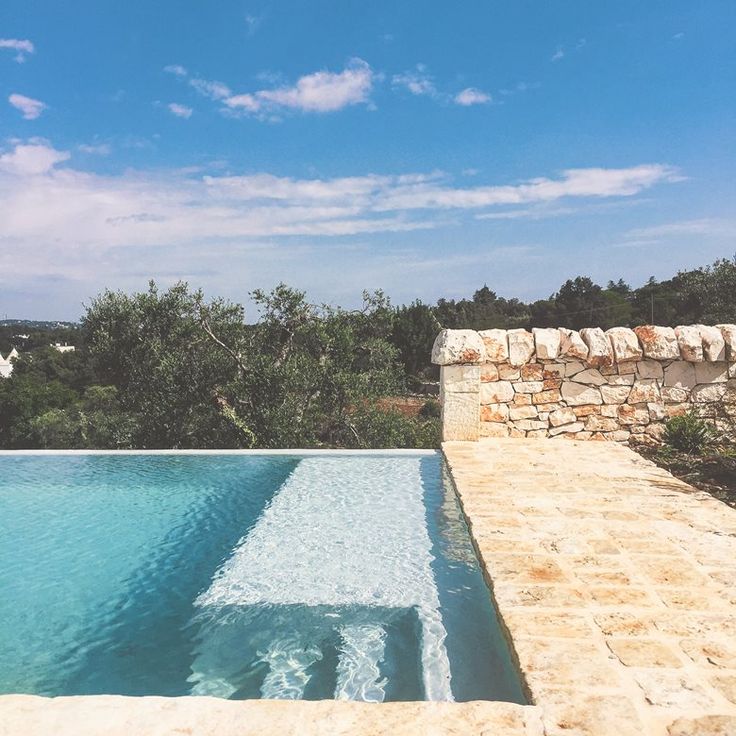
- In areas with landscape restrictions, the pool must harmonize with the context: for example, natural shapes, local stone finishes, and discreet, integrated systems.
Practical Tips
- Check if your municipality has specific regulations or internal guidelines on pools in agricultural zones.
- Choose an in-ground prefabricated pool, well integrated into the landscape, with contained volumes.
- Rely on a professional who can provide a complete design, including a well-prepared landscape report—project quality often affects permit outcomes.
The pool as landscape architecture
The complex process required to build a pool in the countryside reminds us that a pool isn’t just a facility, but true architecture—a layered project impacting both the landscape and how we experience outdoor spaces.
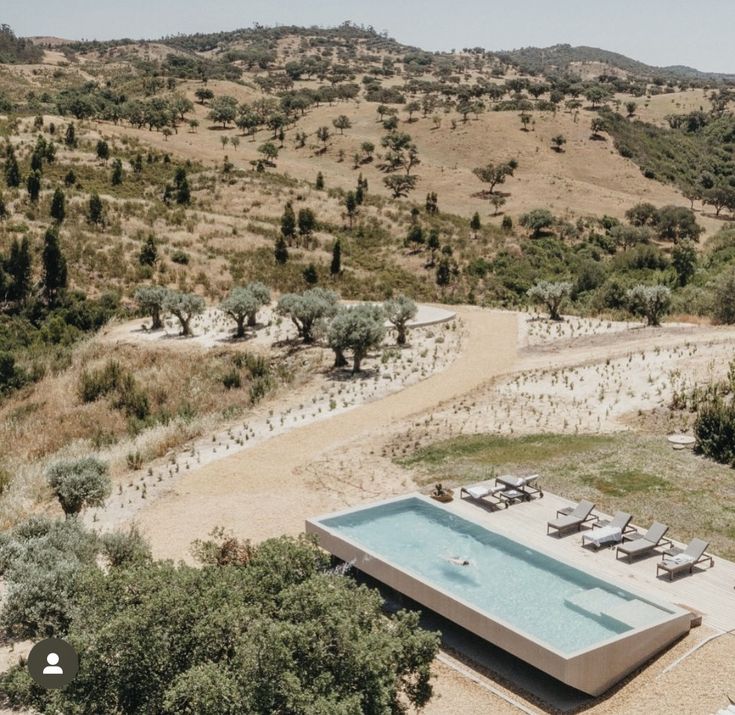
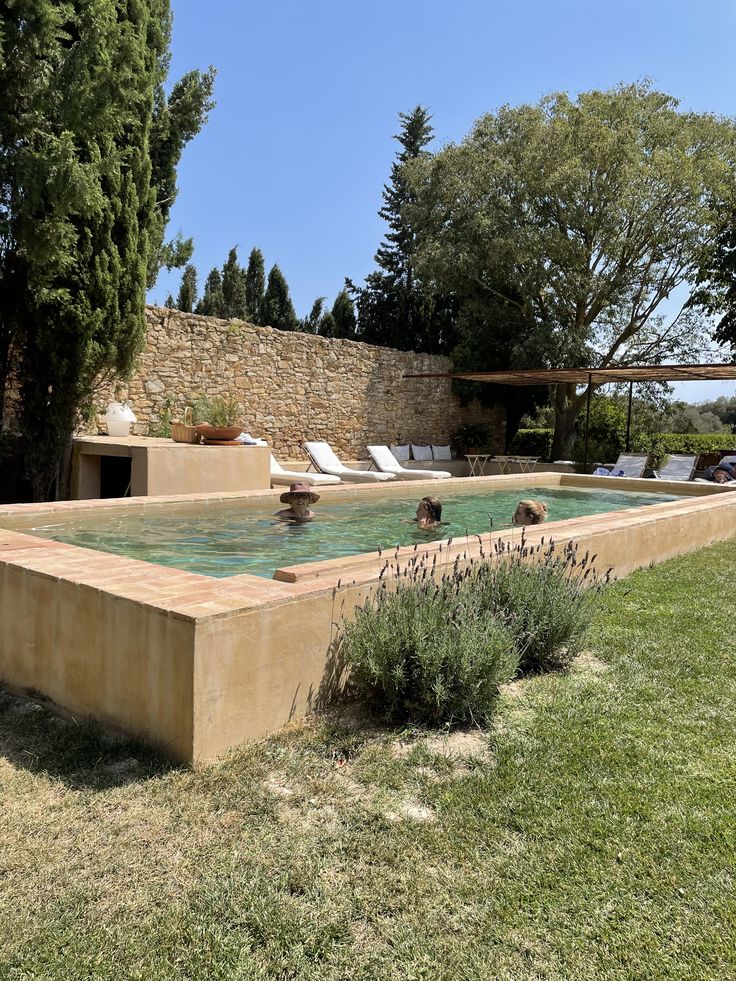
There are two main design approaches, depending on the relationship with the ground:
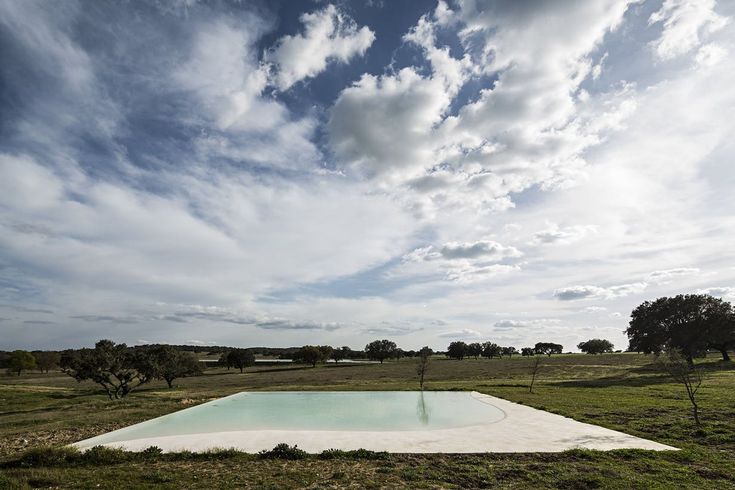
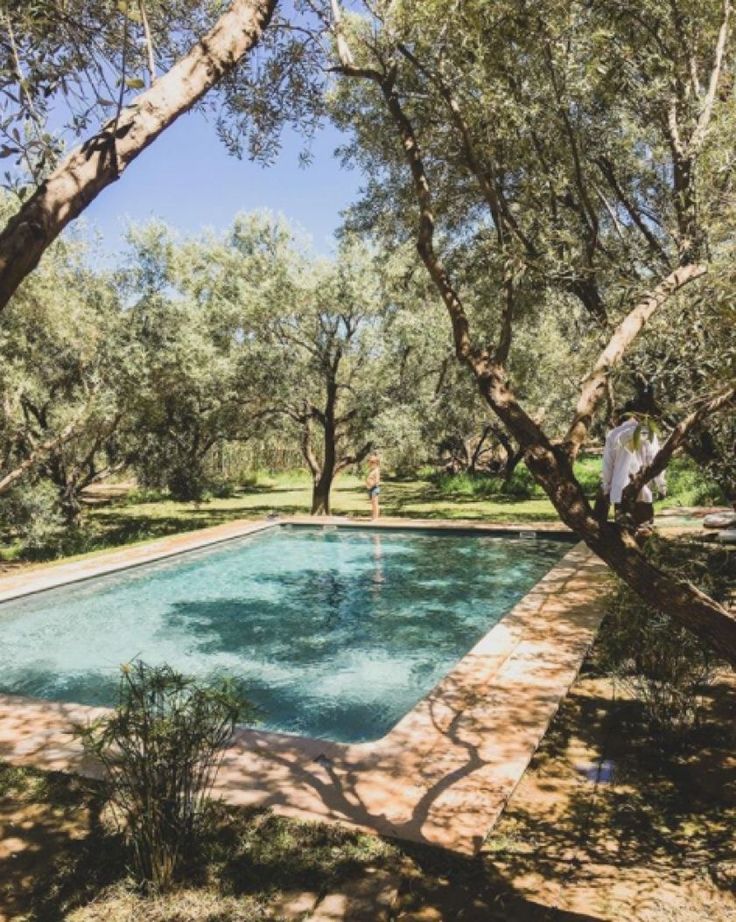
- Pool in continuity with the terrain
It blends into the landscape, becoming part of the local geography (e.g., paving, vegetation, water…). - Pool as an independent volume
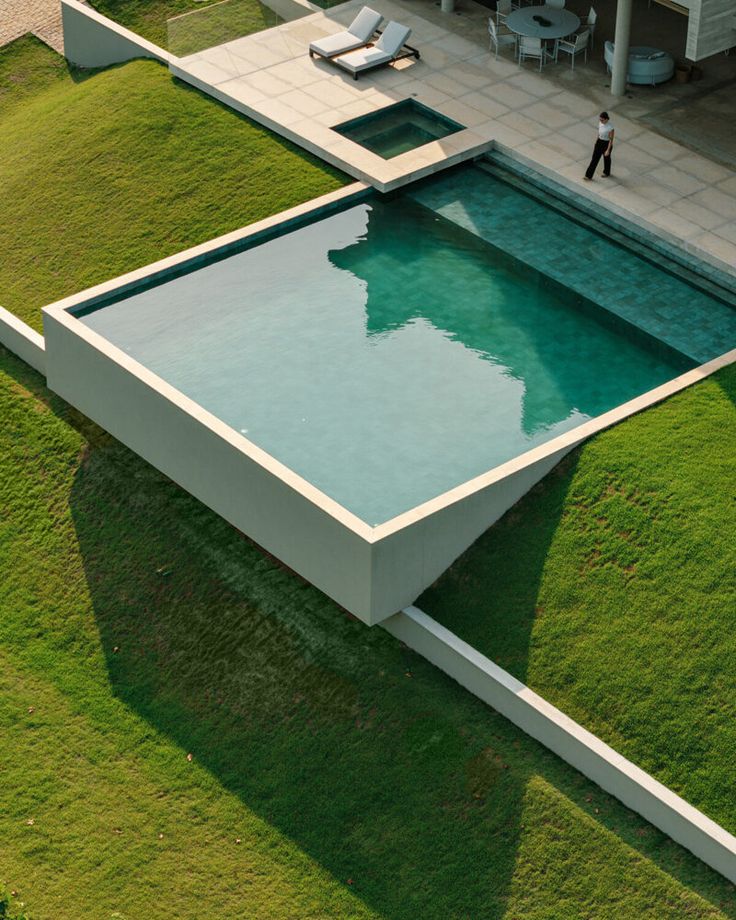
It stands apart from the ground, appearing as a distinct built element, suggesting a viewpoint over the landscape.
This distinction reflects two opposite visions of the relationship with the landscape: fusion with the environment or separation and architectural definition.
Two Emblematic Examples
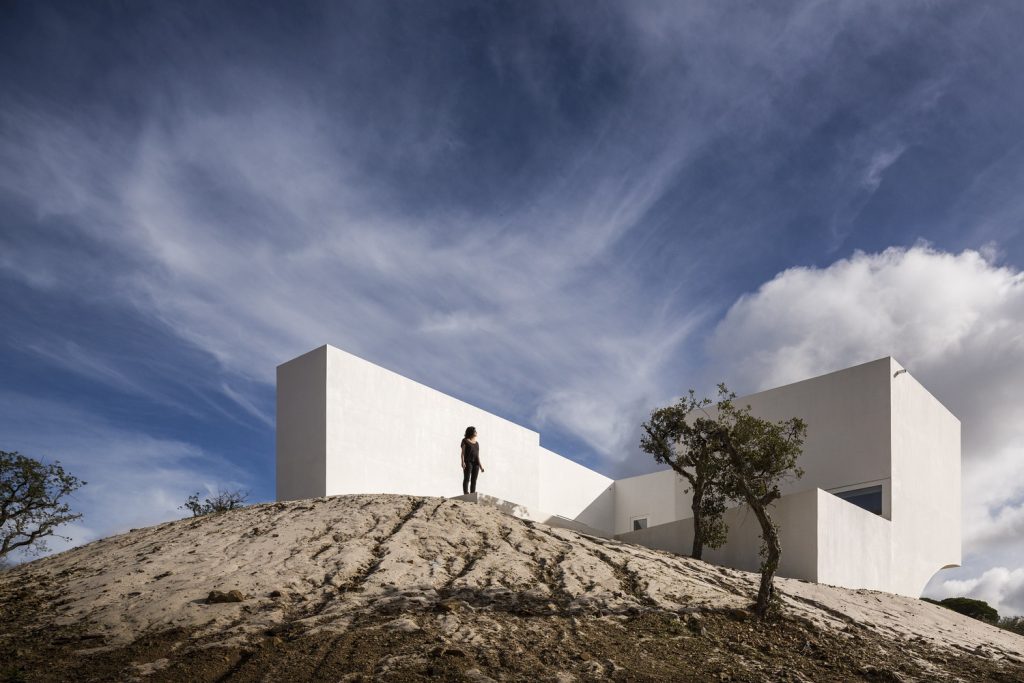
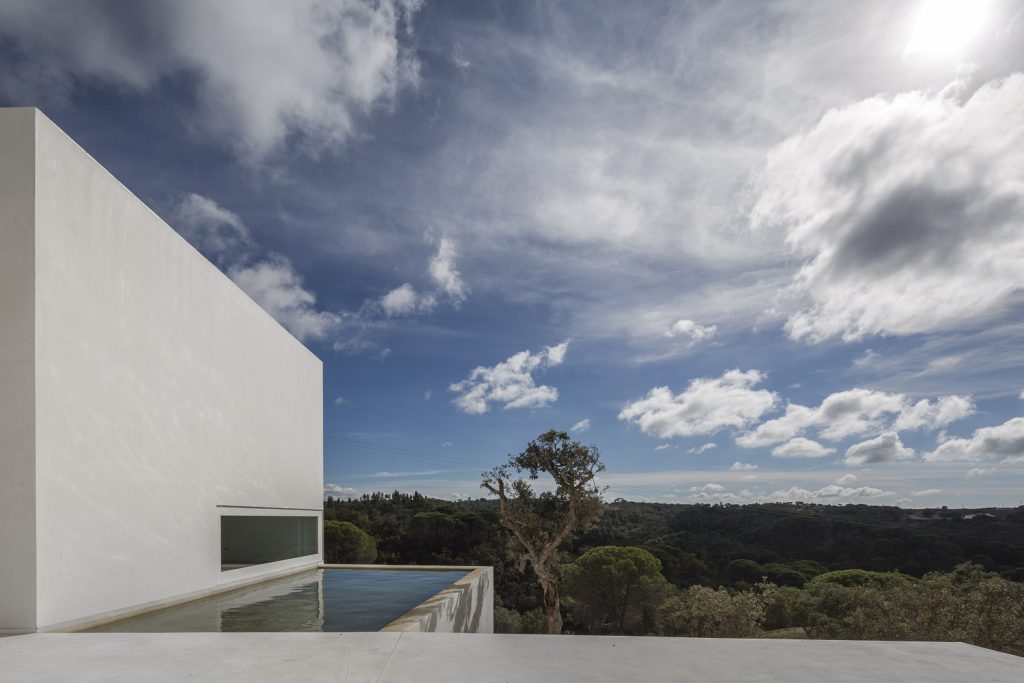
House in Melides, Portugal – Aires Mateus
Pool as an architectural volume, integrated with the building’s connection to the ground.
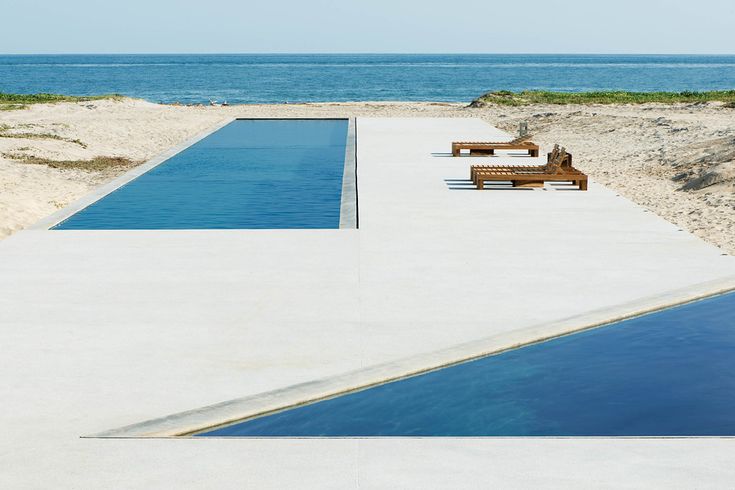
Casa Wabi, Oaxaca, Mexico – Tadao Ando
Minimal pool, blending into the terrain with essential simplicity, shaping the ground without emerging.
Between These Extremes: Multiple Possibilities
Pool Types: Pros and Cons
| Types | Pros | Cons |
|---|---|---|
| Cast-in-place reinforced concrete | Maximum customization, excellent durability, refined finishes | High costs, long timelines, requires structural design |
| In-ground prefabricated (steel, fiberglass, polymers) polimeri) | Lower costs, fast installation, less structural impact | Shorter lifespan, limited customization, risk of ground pressure damage |
| Removable above-ground kit | No bureaucracy, very cheap, no excavation needed | Poor aesthetics, low durability, does not add property value |
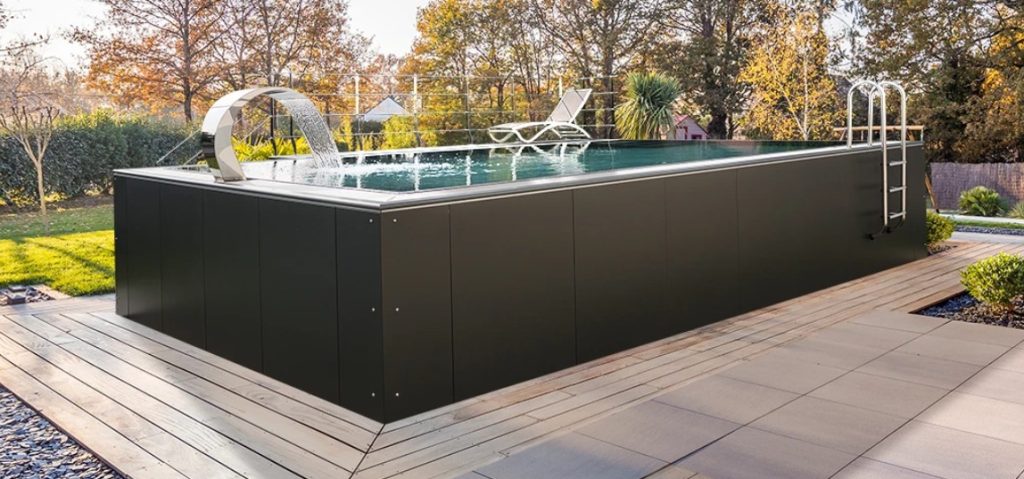
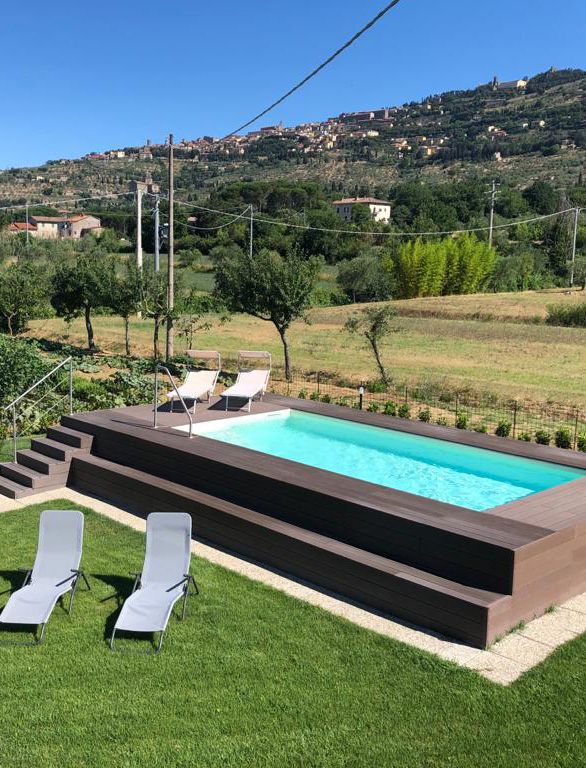
| Permanent above-ground (wood, reinforced PVC) | Good quality/price ratio, less bureaucracy | Limited landscape integration, medium durability |
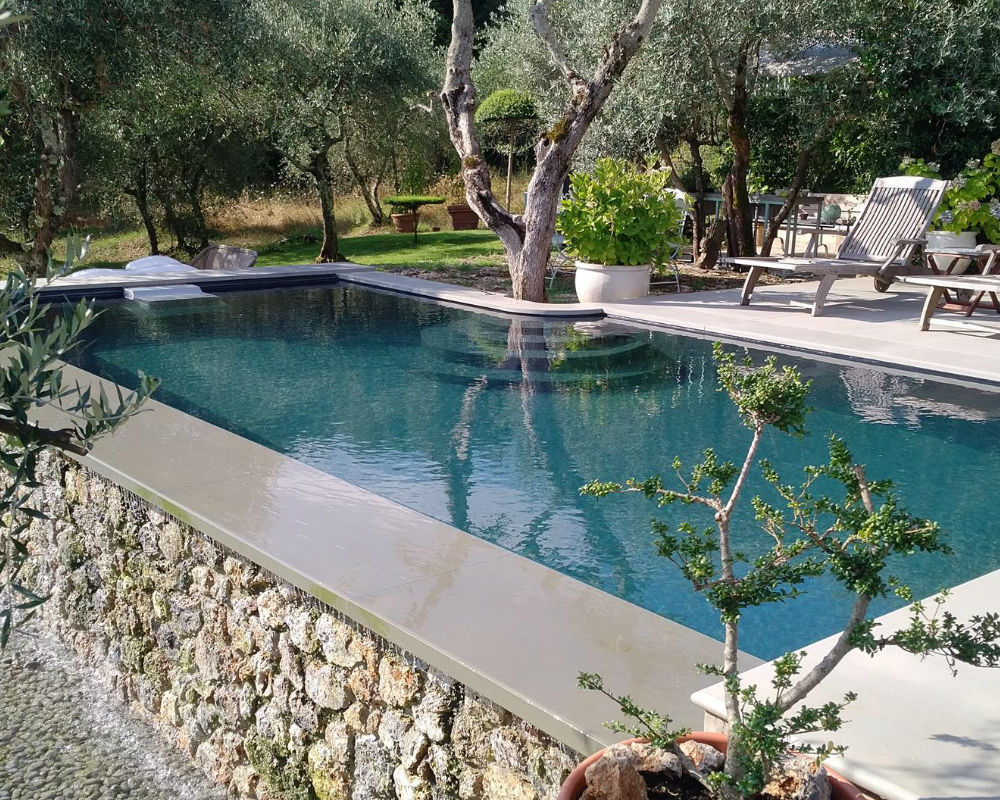
Tip: designing a pool with natural finishes, earth-tone colors, organic shapes, and screening hedges can greatly improve the chances of getting landscape authorization.
How much does it cost to build a swimming pool in a countryside home in Sicily?
Thanks to the favorable climate, a swimming pool can be used for 6–7 months a year, making it an appealing investment for a seasonal residence.
Estimated indicative costs (2025):
| Type | Average turnkey cost |
|---|---|
| Reinforced concrete (8×4 m) | €25,000 – €40,000 |
| Prefabricated in-ground | € 15.000 – € 25.000 |
| Stable above-ground | € 5.000 – € 12.000 |
| Removable kit pool | € 1.000 – € 5.000 |
Management costs:
- Annual maintenance: €500 – €1,000
- Possible increase in property taxes (IMU) in some municipalities
- Electricity consumption (pumps, filters)
A swimming pool is not (just) a structure — it’s a choice
Designing a swimming pool isn’t just about digging a basin; it’s about deciding how to inhabit the outdoor space — how to live the garden, the water, the light, and the silence.
In Sicily — especially in the countryside — this choice requires a serious dialogue not only with regulations but also with the landscape, the history of the property, and your real needs.
Do you want to know if you can build a pool in your countryside home?
Every situation is unique: a building legalized in the 1980s, a plot with landscape restrictions, a house that may also need rethinking outdoors.
If you’re considering a simple, integrated pool consistent with the context, we can help you evaluate:
- the regulatory and landscape feasibility
- the most suitable type of pool (structure, costs, impact)
- a tailored design process
→Write to us to tell us about your case or book an initial consultation.
A desire can start from a pool of water. A project can become reality.
Behind Riusourbano
Every article you read here comes from real design experiences. We are architects at Architetti Gianuario Ustica, and through Riusourbano we share our way of living, thinking, and transforming spaces. If you have an idea in mind, or a place you’d like to change, we’re ready to listen.
→You can find us here and contact us at riusourbano@gmail.com